Wax and Memory: The Candle Makers Bottling the Smell of Exactly Where You're From
There's a candle that smells like a used bookstore on a rainy Tuesday in Portland. Not a bookstore in general — a specific kind, the ones with warped wooden floors and paperbacks stacked in no particular order, where the mustiness hits you before the door even swings shut. Another one, made in a Brooklyn apartment, captures the precise moment summer rain meets hot concrete on a street that's been baking since June. A third, from a maker in New Orleans, layers chicory coffee, magnolia, and something faintly like mildew in a way that somehow feels like a love letter.
This is where candle culture is going, and honestly? It's about time.
Mass Market Wax and the Smell of Nowhere
For years, the candle aisle has been a parade of the aggressively generic. 'Fresh Linen.' 'Seaside Escape.' 'Warm Vanilla.' These scents are engineered to appeal to the broadest possible demographic — which means they end up smelling like no place in particular. They're olfactory wallpaper. Inoffensive, forgettable, and completely disconnected from lived experience.
The artisanal candle movement has been pushing back against that for a while now, but something sharper is happening lately. Makers across the country are getting hyper-specific — not just 'Pacific Northwest pine' but the exact resinous, wet-bark smell of a particular trail in the Cascades after the first October rain. Not just 'Southern summer' but the combination of cut grass, hot asphalt, and honeysuckle that defines a specific county road in Georgia at dusk.
This is place-based fragrance. And it's changing what we expect a candle to do.
The Craft Behind the Concept
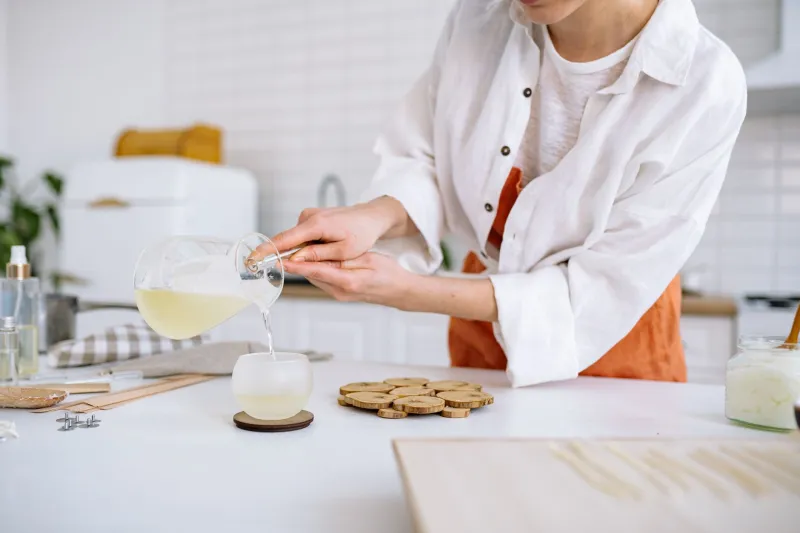
Making a scent that captures something this specific isn't a matter of grabbing a few fragrance oils off a shelf. The makers doing this work are spending serious time — sometimes months — sourcing raw materials, testing blends, and refining ratios down to the decimal point.
Some are working with natural botanicals harvested close to home: cedar bark from nearby forests, dried wildflowers from local meadows, citrus peel from neighborhood markets. Others are collaborating with professional perfumers to translate a sensory memory into a fragrance pyramid that can survive the heat of a burning wick. A few are even experimenting with what the industry calls 'captive molecules' — synthetic aroma compounds that replicate scents you can't extract from nature, like wet pavement or old paper.
The result is candles that require explanation — and that's exactly the point. When you buy one, you're not just buying a scent. You're buying a story, a geography, a specific emotional register tied to a place someone actually loves.
Why 'Where You're From' Hits Different Right Now
It's worth asking why this particular moment is so fertile for this kind of work. Part of the answer is obvious: we've all spent a lot of time in our homes recently, and home has become a much more charged concept. People are thinking harder about what their spaces smell like, feel like, mean.
But there's something deeper happening too. In a culture that increasingly flattens everything — same chain restaurants in every city, same algorithm-curated content everywhere, same aesthetic trends rippling across every zip code simultaneously — there's a real hunger for the specific. For things that couldn't have come from anywhere else.
A candle that smells like your grandmother's neighborhood in Baltimore, or like the corner of a Chicago neighborhood that's been the same since 1987, or like the dry heat of a Tucson afternoon — that's not just a product. It's a small act of cultural resistance. It says: this place is distinct and worth remembering.
The Community Connection
What's especially interesting about the makers leading this movement is how deliberately relational their work is. Many of them aren't just selling candles — they're building ongoing conversations with their communities about what those communities smell like.
Some hold workshops where neighbors come in and describe their most vivid local scent memories, then watch those descriptions get translated into fragrance blends. Others release limited seasonal runs tied to specific local events — the smell of a particular farmers market in July, or the exact combination of wood smoke and fallen leaves that hits a specific park in October. These aren't products you find on the shelves of a national retailer. They're artifacts of a place, made in limited quantities, for people who know what they mean.
There's a maker in Detroit who's been documenting the scent landscape of her neighborhood as it changes — capturing the smell of a block before a building comes down, or after a community garden goes in. She describes her work as 'olfactory journalism.' Which sounds a little precious until you actually smell one of her candles and realize she's right.
The Limits and the Beauty of the Form
None of this is without its complications. Scent is famously subjective — what smells like 'home' to one person smells like 'someone else's house' to another. Trying to capture a collective sensory experience in a single fragrance blend is an inherently imperfect project. And there's always the risk of sentimentality tipping into kitsch.
But that's also kind of what makes it interesting. These makers aren't claiming to produce objective documents of a place. They're offering their version — filtered through memory, emotion, and craft. When you light one of these candles, you're entering into someone else's sensory imagination, and maybe finding that it overlaps with yours in unexpected ways.
That's what the best art does, really. It offers something personal and asks if you recognize yourself in it.
Light One Up
If you haven't stumbled across one of these hyper-local makers yet, they're worth seeking out. Check your city's local markets, independent boutiques, and — yes — Instagram, where many of them document their process in the kind of detail that makes you understand exactly what you're buying and why it matters.
Buy the one that sounds like it could never have come from anywhere but one specific place. Light it on a Tuesday evening when you don't have anywhere to be. See if it takes you somewhere.
Chances are, it will.