One Episode a Week: The Americans Turning TV Night Into a Ritual
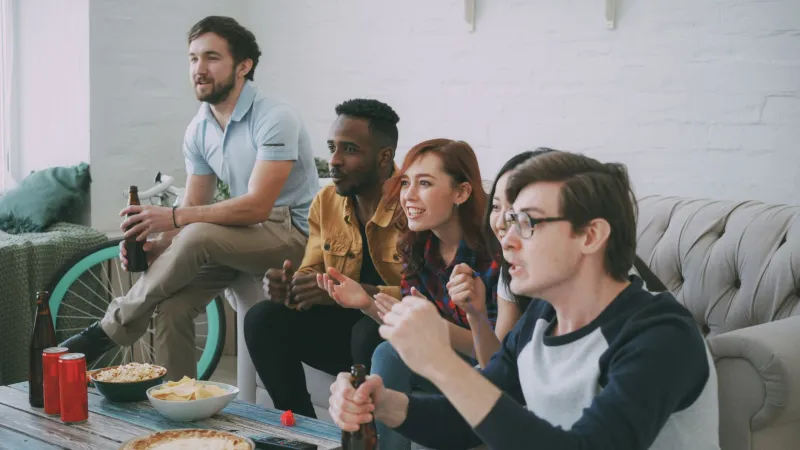
Somewhere in Portland, Oregon, seven people are crammed onto two couches arguing about a single scene from a prestige drama they watched three days ago. Nobody has moved on to the next episode. Nobody is allowed to — that's the rule. The conversation is still going, and honestly? That's kind of the whole point.
This is what intentional viewing looks like in 2025. And it's spreading.
The Binge Hangover Is Real
For the better part of a decade, streaming platforms have conditioned us to consume television like fast food — quickly, alone, and with barely a second to taste it. Netflix queued up the next episode before the credits finished rolling. Disney+ dropped entire seasons at midnight. The cultural message was clear: more, faster, now.
But something shifted. Maybe it was the pandemic years, when we burned through every comfort show available and came out the other side feeling oddly empty. Maybe it was the algorithm fatigue — that hollow feeling of finishing a ten-episode season in a weekend and struggling to remember a single character's name by Tuesday. Whatever the cause, a growing number of Americans are quietly opting out of binge culture and replacing it with something that looks almost radical by comparison: slowness.
"I watched an entire season of a critically acclaimed show in two days and felt nothing," says Marcus, a 34-year-old graphic designer in Chicago who now co-hosts a weekly viewing night with a rotating group of friends. "We literally sat around for two hours afterward talking about one episode of The Bear, and I felt more connected to that show — and to those people — than I had to anything in years."
Watch Parties With Intention
The watch party isn't new. People have been gathering around televisions since the medium was invented. But what's emerging now feels different from a Super Bowl gathering or a Game of Thrones finale event. These aren't just social occasions — they're curated experiences with a genuine curatorial philosophy behind them.
Groups are setting ground rules. No phones during the episode. No spoilers for people who've seen it before. Pause for conversation when something lands hard. Some hosts send out discussion questions in advance, the same way a book club might. Others pair episodes with food that connects to the show's setting or themes — kimchi jjigae for a Korean drama, red sauce pasta for an episode set in New York.
In Atlanta, a group called The Slow Screen Society meets every Thursday to watch one episode of a chosen series. They've worked through prestige cable dramas, international films broken into parts, and even old network sitcoms they're revisiting with fresh eyes. The group started as four people and now has a waitlist.
"We treat it like a film studies class, except nobody's being graded and the wine is better," says Deja, one of the founding members. "We've had conversations about grief, about race, about what it means to be a good person — all because a TV show gave us a shared starting point."
Television as a Social Art Form
There's something philosophically interesting happening here that goes beyond nostalgia or anti-tech sentiment. These viewers are repositioning television as a communal art form — something closer to theater than to content consumption.
For most of TV history, that communal dimension was built into the medium by necessity. You watched when it aired. Everyone in the country watched the same thing on the same night. The next morning, the conversation was already happening at the office, in the diner, on the bus. The show was a shared cultural event, not a personal algorithm recommendation.
Streaming killed that shared clock, and with it, a lot of the social glue that television used to provide. When everyone is watching different things at different times, the water-cooler moment evaporates. You can't talk about a show if half the room is on episode three and the other half finished the whole season last month.
Intentional viewing groups are essentially rebuilding that shared clock by hand. They're choosing to be on the same page — literally — so that the conversation can happen in real time, with full presence.
The Rewatch as a Critical Act
Beyond new series, many of these groups are turning to rewatches — returning to beloved shows with older eyes and asking different questions. The Sopranos. Buffy the Vampire Slayer. Six Feet Under. The Wire. Shows that were absorbed quickly the first time are now being examined slowly, scene by scene, with the benefit of cultural distance.
"Rewatching Mad Men with my friends in my thirties hits completely differently than watching it alone in my twenties," says Priya, a writer based in Brooklyn who hosts a monthly rewatch series. "We notice things we missed. We catch references. We argue about whether Don Draper is sympathetic or not — and we never agree, which is the best part."
This kind of critical revisiting is something that literature and film have always encouraged, but television has historically been treated as disposable. Intentional viewing communities are pushing back on that assumption, insisting that good television deserves the same sustained attention we give to novels or paintings.
Slowness as a Political Statement
It would be easy to dismiss this as a lifestyle trend — a niche hobby for people with too much free time. But there's a deeper current running through it. In a media landscape engineered for maximum engagement and minimum friction, choosing to slow down is genuinely countercultural.
Streaming platforms are built around metrics: watch time, completion rates, re-engagement. Every design decision is optimized to keep you watching longer and moving faster. Intentional viewing communities are, in a small but meaningful way, refusing to play by those rules. They're insisting that how you watch matters as much as what you watch.
They're also pushing back against the isolation that binge culture can quietly reinforce. Watching alone in the dark, moving from one episode to the next without pausing to feel anything — it's efficient, sure. But it's not particularly human.
Making Space for the Conversation
What strikes you most, talking to people in these communities, is how much they value the conversation over the content itself. The show is almost a pretext. What they're really after is the excuse to sit in a room together, pay attention to the same thing, and then talk about it like it matters.
Because it does matter. Stories matter. Television, at its best, is one of the most powerful storytelling mediums we have — capable of building empathy, sparking debate, illuminating lives we'd never otherwise encounter. Treating it like background noise is a kind of waste.
The slow watchers get that. And one episode at a time, they're making the case that TV night can be something worth actually showing up for.