Your Home Has a Smell — These People Are Making Sure It's Intentional
Walk into almost anyone's home and within three seconds, before you've clocked the furniture or the art on the walls, you've already formed an impression. Not visually — through your nose. That first inhale tells you something about who lives there, even if nobody planned it that way. For most of us, the smell of our homes is an accident: leftover cooking, whatever candle was on sale at Target, maybe a pet.
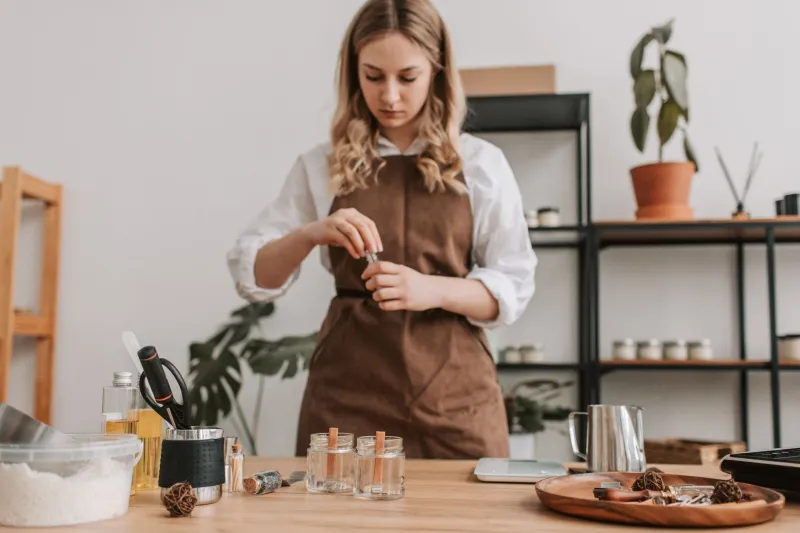
But a quietly passionate community of Americans is pushing back on that randomness. They're blending their own candles, mixing custom incense, and formulating room sprays from scratch — all in pursuit of something that sounds almost philosophical when you say it out loud: a signature scent for the place they live.
More Than a Candle Hobby
When Deja Okonkwo, a 31-year-old graphic designer in Atlanta, first got into candle-making during the pandemic, she framed it the way most people do — as a craft project, something to do with her hands. But about six months in, something shifted.
"I realized I was trying to recreate a smell," she says. "My grandmother's house in Lagos had this specific combination — shea butter, a particular wood, something floral I could never identify. I couldn't fly there. So I started trying to build it."
She spent weeks experimenting with fragrance oils and essential oils, layering ylang-ylang with sandalwood and a touch of amber until something clicked. Now that blend burns in her apartment every evening. "When I come home and smell it, I feel settled," she says. "Like the space is actually mine."
This idea — that a home's scent can function as a form of personal identity — is gaining serious traction. Craft supply retailers have reported steady upticks in candle-making and incense supplies over the past three years, and fragrance-focused communities on Reddit and TikTok have exploded with tutorials on everything from cold-process wax blending to resin incense grinding. What started as pandemic-era hobby culture has matured into something more intentional.
The Psychology of Smell and Place
There's real science behind why this hits differently than, say, picking out a throw pillow. Smell is the only sense with a direct line to the limbic system — the part of the brain that processes emotion and memory. When you catch a scent, you're not routing it through the rational, analytical parts of your brain first. It lands in the emotional core immediately, which is why a single whiff of something can transport you to a specific afternoon twenty years ago before you've even consciously registered what you're smelling.
Psychologists who study environmental design have long noted that olfactory cues are among the most powerful tools for shaping how a space feels — yet they're almost entirely absent from mainstream conversations about home design. We agonize over paint colors and lighting temperatures. We read entire articles about the psychology of furniture arrangement. And then we plug in a generic air freshener and call it a day.
For the people crafting their own scent identities, that gap feels like a missed opportunity.
Building a Scent From Scratch
Marco Delgado, a 27-year-old in Denver who blends his own incense cones, describes his process as something between meditation and chemistry homework. He sources raw resins — frankincense, copal, benzoin — along with dried botanicals and binding powders, then grinds and mixes them by hand before pressing them into molds.
"Incense has this whole cultural history that I find really grounding," he says. "I'm Mexican-American, and copal specifically is tied to Day of the Dead traditions in my family. But I'm also adding things that are just mine — dried pine from a hike I did last summer, a little vetiver because I love how it smells after rain."
The result is something that doesn't exist anywhere else. You can't buy it. It's not a product. It's more like a living record of who he is and where he comes from, encoded in smoke.
This is where scent creation starts to feel less like a hobby and more like a genuine art form. The vocabulary even starts to overlap — notes, composition, balance, intention. Perfumers have always understood this, but the idea that regular people might apply the same thinking to their living rooms is relatively new.
The Room Spray Crowd
Not everyone wants to deal with open flames or smoke. A growing segment of DIY scent creators is focused on room and linen sprays — water-based or alcohol-based solutions infused with essential oil blends that can be misted onto fabric, into the air, or along entryways.
Tamsin Reeves, a 38-year-old librarian in Portland, Oregon, makes a different spray for each room in her house. Her bedroom blend is built around lavender, cedarwood, and a faint hit of black pepper. Her home office gets something sharper — eucalyptus, rosemary, a little citrus. Her entryway gets what she calls her "welcome blend," a warm combination of cardamom, vanilla, and sandalwood.
"I started thinking about it like curating different moods," she says. "The bedroom is for rest, so it smells restful. The office needs to feel alert. The entryway is the first thing guests experience, so it should feel like a hug."
She laughs a little when she describes it, aware that it sounds like a lot of thought to put into air. But she's also serious about it. "Your home is supposed to be an extension of you. People spend thousands making it look right. Why wouldn't you think about how it smells?"
When Scent Becomes Memory Architecture
There's a term some scent enthusiasts have started using — "memory architecture" — to describe the intentional layering of sensory experiences in a home to create emotional resonance over time. The idea is that if you consistently burn a particular candle during Sunday mornings, that scent will eventually become inseparable from the feeling of Sunday mornings in your home. You're not just creating atmosphere in the moment; you're building a sensory archive that will carry meaning for years.
Deja Okonkwo thinks about it this way: "Someday I want my kids to smell that blend and feel what I feel. Like a thread connecting us to something bigger."
It's a small, quiet kind of world-building. No algorithm is curating it. No brand is selling it. It's just people with mortars and pestles and wax melters and a deep, instinctive need to make the places they live feel undeniably, unmistakably theirs.
Maybe the most personal design statement you'll ever make won't hang on a wall or sit on a shelf. Maybe it'll just drift through the room, invisible and completely unforgettable.