Cut, Paste, Repeat: America's Zine Makers Are Printing Their Way Out of the Algorithm
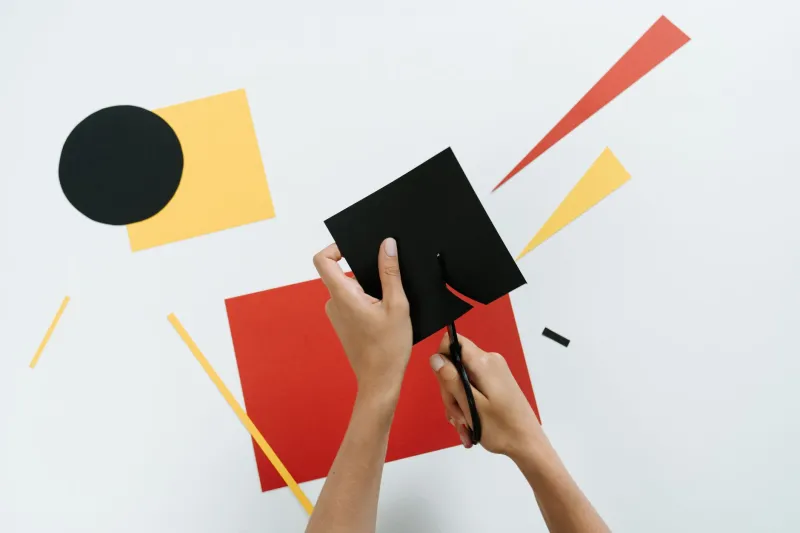
Somewhere in a Philadelphia apartment, Maya Reyes is elbow-deep in a pile of cut-up magazine clippings, a glue stick in one hand and a Sharpie in the other. She's working on the seventh issue of Ugly Beautiful, her hand-assembled zine about body politics, thrifting, and growing up Latina in the suburbs. Print run: 200 copies. Distribution method: a tote bag, some local record shops, and a network of strangers who found her through word of mouth.
"I tried the Instagram thing," she says, laughing. "I'd post something that felt really personal and it would get, like, 40 likes. Then I'd post a photo of my lunch and it'd get 300. The algorithm doesn't care what you're actually trying to say."
So she printed it instead.
Something Old, Something Urgent
Zines — self-published, small-circulation, usually photocopied booklets — have been around since the 1930s, when science fiction fans started swapping homemade newsletters. They exploded through punk and riot grrrl subcultures in the '70s and '90s, became a queer community lifeline before the internet existed, and then... kind of faded into nostalgia territory. Until now.
In the last several years, zine fests have multiplied across the country at a striking pace. The Chicago Zine Fest, the LA Zine Fest, the Brooklyn Zine Fest, the Portland Zine Symposium — these aren't niche gatherings anymore. They're packed, energized events drawing thousands of attendees who show up not just to buy but to talk, connect, and trade physical things made by real human hands.
According to organizers of the Denver Zine Library, submissions to their collection have more than doubled since 2020. That tracks with what makers on the ground are experiencing.
"People are hungry for something that isn't optimized," says Jordan Kwan, who publishes Slowburn, a queer arts and fiction zine out of Austin. "When you hold a zine, you can feel that a person made it. There's a typo on page four. The margins are weird. That's not a flaw — that's the whole point."
The Rebellion Is Stapled Together
It would be easy to frame zine culture as pure nostalgia — Gen Z romanticizing an analog past they never actually lived through. But spend any time talking to makers and a different picture emerges. This isn't about rejecting technology out of sentimentality. It's a deliberate, even political, choice about who controls the means of cultural production.
Algorithmic content platforms reward consistency, broad appeal, and — let's be honest — a certain kind of attractiveness. Zines reward none of that. They reward specificity. A zine about competitive dog grooming in rural Mississippi. A zine written entirely in second-person about grief. A zine that's just one person's annotated grocery lists from 2019. These things exist. People love them.
"There's no shadowban for a zine," says Reyes. "No one's going to demonetize it. Nobody can take it down."
That sense of permanence and autonomy matters, especially for communities whose voices get routinely suppressed or sanitized online. Trans zine makers, Indigenous writers, disability activists — these groups have found in zines something the internet promised but rarely delivered: an uncensorable platform that belongs entirely to them.
How the Copies Move
Distribution is where the magic gets messy and interesting. Some zines live exclusively in physical spaces — left in free piles at laundromats, tucked into library book drops, exchanged at shows. Others move through surprisingly sophisticated networks.
Distros (short for distributors) are small operations — sometimes one person with a website and a storage unit — that collect zines from makers and sell or trade them in bulk to shops and individuals. Pioneers like Microcosm Publishing out of Portland have been doing this for decades, but newer distros are popping up everywhere, many run by young people of color specifically to amplify underrepresented voices.
Then there's the mail art tradition, which never really died. Swap networks on platforms like Discord or even Reddit connect zine makers who exchange copies through the postal system — an act that feels almost radical in its slowness.
"I got a zine from someone in rural Alabama last month," says Kwan. "It was about fishing and queerness. I never would have found that person online. The algorithm wouldn't have shown it to me."
Everyone's a Publisher
Maybe the most culturally significant thing about the zine revival is what it does to the concept of authorship. Publishing, for most of American history, was a gatekept industry. Editors decided what mattered. Distributors decided what reached readers. Zines obliterate that entire structure.
A 19-year-old in Tulsa with a library card (free photocopying!), a pair of scissors, and something to say can be a publisher by this weekend. That's not a metaphor. That's literally how it works.
Art schools are starting to notice. Programs at institutions like the School of Visual Arts in New York and the California College of the Arts have incorporated zine-making into their curricula, not as a novelty exercise but as a serious lesson in independent media production and visual communication.
For many makers, the zine is also a gateway. Reyes has since sold original artwork through her zine's mailing list. Kwan landed a freelance illustration gig when an art director picked up a copy at a fest. The zine doesn't replace a career — it builds one, sideways and on your own terms.
The Feel of It
There's one thing every zine maker mentions eventually, almost sheepishly, like they know it sounds too simple: the physical experience of holding one.
The weight of the paper. The smell of the ink. The slight crookedness of a cover that was cut by hand. These aren't incidental details. They're the whole argument.
In a culture where content is infinite and attention is the scarcest resource on earth, a zine asks you to slow down and stay a while. It doesn't auto-play. It doesn't push notifications. It sits on your coffee table and waits.
Maya Reyes puts it simply: "I want someone to read mine on the subway and fold down a page because something hit them. You can't fold down a page on TikTok."
Issue eight of Ugly Beautiful drops next month. Two hundred copies. No algorithm required.