Ink Over Interface: The Quiet Revolution of Americans Writing Letters Again
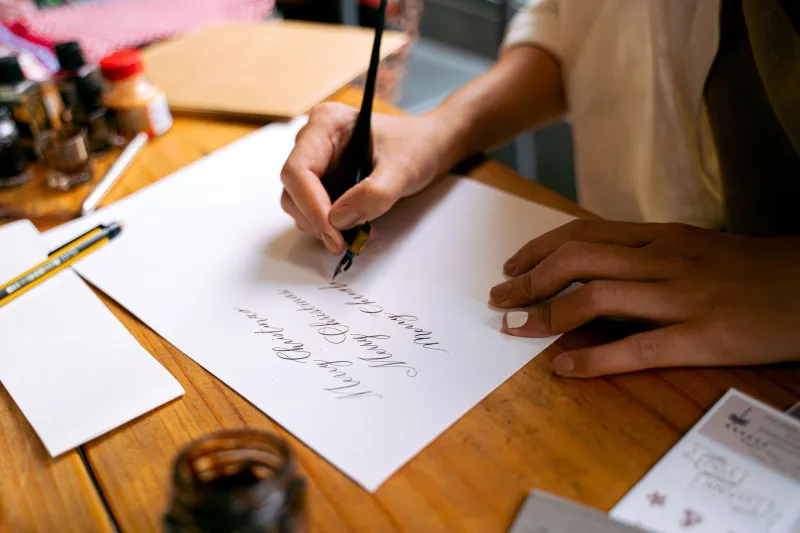
Somewhere in Portland, Oregon, a graphic designer named Maya keeps a dedicated drawer in her apartment filled with fountain pens, wax seals, and stationery sourced from a small paper shop in Japan. She writes at least three letters a week — to her grandmother in Georgia, to a pen pal she met through a Reddit community, and occasionally to her own future self. Her inbox, meanwhile, sits at an unread count she stopped caring about months ago.
"Email feels like work," she says. "A letter feels like a gift."
Maya is not alone. Across the United States, a quiet but unmistakable cultural shift is underway — one measured not in app downloads or engagement metrics, but in stamps purchased and envelopes sealed. The handwritten letter, long considered a relic of a slower era, is being reclaimed by a generation that grew up with broadband and is now quietly, deliberately, choosing something older.
The Community Behind the Comeback
Letter-writing communities have been sprouting up in cities and online spaces alike. Organizations like the Letter Writers Alliance — a Chicago-based collective that has been championing correspondence since 2007 — have seen renewed interest, particularly among people in their 20s and 30s. Pen pal matching groups on platforms like Reddit and Instagram have accumulated tens of thousands of members, connecting strangers across state lines who exchange everything from postcards to multi-page handwritten essays.
There's also a growing intersection between letter writing and activism. During the height of the prison reform movement, volunteer networks organized campaigns to send handwritten letters to incarcerated individuals — recognizing that a physical letter carries weight that an email simply cannot replicate behind institutional walls. Letter-writing nights became community events, equal parts social gathering and civic act.
In New York, a loose collective of artists and writers hosts monthly "correspondence salons" in rotating Brooklyn apartments. Attendees bring their own supplies and write letters in real time — to strangers in the room, to distant friends, to public figures. The event is deliberately low-key, but the waiting list to attend has grown steadily.
What the Brain Knows That the Inbox Doesn't
The psychology behind all of this isn't hard to unpack, though it's richer than simple nostalgia. Research in cognitive science has long suggested that handwriting engages the brain differently than typing — it activates areas associated with memory formation and emotional processing in ways that keystrokes simply don't trigger. When you write by hand, you slow down. You edit in your head before committing to the page. You make choices about word selection that autocorrect will never make for you.
There's also the matter of presence. A handwritten letter is a physical artifact of someone's time and attention. The smudge of ink, the particular slant of someone's cursive, the faint impression of where they pressed too hard — these details communicate something that even the most carefully composed email cannot. Recipients often describe the experience of receiving a handwritten letter as startlingly emotional, even when the content itself is mundane.
"I got a two-page letter from my college roommate last spring," recalls Darius, a teacher in Atlanta. "She lives twenty minutes away. We text constantly. But reading that letter, I felt like I actually knew her again in a different way. It was strange and kind of beautiful."
Paper in the Workplace — Really?
One of the more unexpected frontiers for this revival is professional culture. A small but growing number of managers, entrepreneurs, and executives have started incorporating handwritten notes into their workplace communication — thank-you letters to clients, personal notes to team members after major milestones, even handwritten cover letters that candidates include alongside digital applications.
The effect, anecdotally, is outsized. In a landscape where every touchpoint is digital and therefore instantly forgettable, a handwritten note lands differently. It gets pinned to corkboards. It gets photographed and kept. It signals that someone stopped, thought, and chose to do something harder.
Some companies have started stocking quality stationery alongside printer paper in their supply rooms. A few boutique firms in cities like Austin and Seattle have made handwritten client correspondence part of their formal brand identity — a deliberate counter-signal in industries where everything else is automated.
The Stationery Renaissance Is Very Real
The market has noticed. Independent paper shops and stationery brands have reported consistent growth over the past several years, a trend that accelerated during the pandemic when people, suddenly homebound and hungry for connection, rediscovered the pleasure of sending something physical through the mail. Etsy sellers specializing in handmade stationery, custom wax seals, and letterpress cards have built loyal followings. Even mainstream retailers have quietly expanded their pen and paper sections.
Fountain pen culture, once considered the domain of collectors and enthusiasts, has found a new and younger audience. Online communities dedicated to ink reviews, nib comparisons, and paper recommendations have grown substantially, with newcomers asking beginner questions alongside longtime devotees.
Why It Matters Beyond the Aesthetic
It would be easy to dismiss all of this as aesthetic preference — a lifestyle choice dressed up as a cultural statement. But there's something more substantive happening here. In a media environment that rewards speed, volume, and optimization, choosing to write by hand is an act of deliberate inefficiency. It says: this person, this moment, this relationship is worth the friction.
For many participants in this movement, that friction is precisely the point. The letter demands that you be present. It asks you to think before you speak, in the oldest sense of that phrase. And when it arrives — creased from its journey, smelling faintly of wherever it came from — it asks the same of the person who opens it.
Maya, back in Portland, puts it simply: "I think people are starving for something that doesn't disappear when you close the tab."
She's not wrong. And somewhere, right now, someone is reaching for a pen to tell someone else exactly that.