No Label, No Problem: How Young Creators Are Building Real Careers From Their Bedrooms
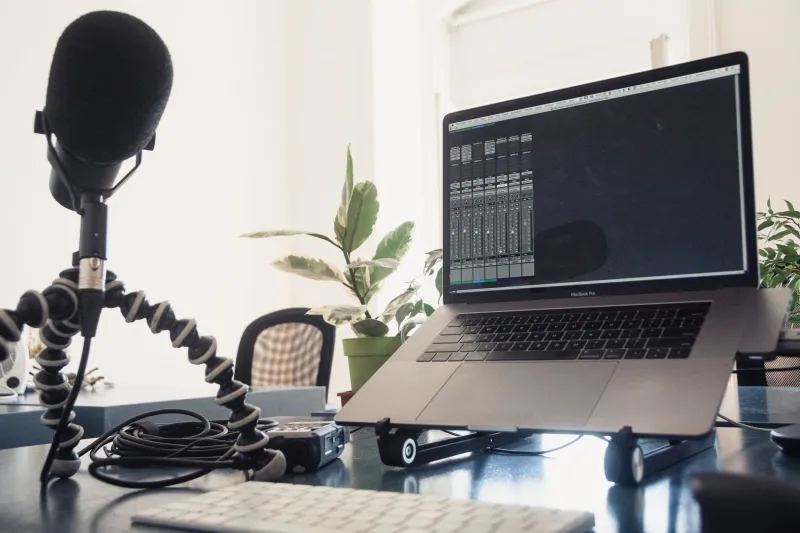
Somewhere in a converted closet in Atlanta, a 22-year-old is mastering her fourth EP of the year. The foam panels on the walls cost her $40 from Home Depot. Her interface was a birthday gift. Her Spotify monthly listeners just crossed 80,000.
No record deal. No manager. No permission.
This is the bedroom studio revolution — and it's less of a trend than it is a full-on restructuring of how creative work gets made, distributed, and valued in America.
The Gear Gap Closed (And Nobody Told the Industry)
For most of the 20th century, making professional-quality music, art, or video required institutional access. You needed a studio, a publisher, a gallery, a network. The gatekeepers weren't just cultural — they were logistical. The equipment alone put professional production out of reach for most people.
That's simply not true anymore.
Digital audio workstations like GarageBand and FL Studio are either free or cheap enough to be birthday-gift territory. Procreate turned the iPad into a professional illustration studio. Canva democratized graphic design. And a halfway-decent USB microphone plus free acoustics treatment can yield recordings that sound, to most ears, indistinguishable from what comes out of a $500-an-hour studio.
The result? An entire generation of creators who never had to ask anyone for access. They just started.
"I didn't know I wasn't supposed to be able to do this," says Marcus, a 24-year-old producer and visual artist from Detroit who releases music and limited-edition prints under the name Solarhaze. "I just watched YouTube tutorials and kept going. By the time I realized people spend years trying to get into rooms I'd never been in, I already had an audience."
What 'Professional Quality' Even Means Now
Here's where things get philosophically interesting. The bedroom studio movement isn't just about lowering costs — it's quietly dismantling the idea that polish equals value.
Some of the most-streamed, most-shared, most culturally resonant work coming out right now has a certain intimacy to it. A slight room reverb. A vocal take that wasn't pitch-corrected into oblivion. A visual with visible brushwork instead of a corporate-clean finish. Audiences aren't just tolerating these qualities — they're actively seeking them out.
In a media landscape saturated with algorithmically optimized content, rawness reads as authenticity. And authenticity, right now, is the scarcest resource in culture.
Jasmine, a 20-year-old illustrator and zine-maker based in Portland, Oregon, puts it plainly: "People can tell when something was made by a human being who actually cared about it. That's not a technical quality. You can't buy it."
She sells original prints and digital downloads through her own Shopify store and a Patreon community of 1,200 subscribers who get early access to her work. No gallery representation. No agent. Last year she made more money from her art than her older sister made at her first post-college office job.
The Community Infrastructure Nobody Talks About
What makes the bedroom studio economy function isn't just tools — it's the dense web of online communities where creators teach each other, collaborate, and build audiences together.
Reddit threads, Discord servers, TikTok comment sections, Substack newsletters — these aren't just marketing channels. They're the new art schools, the new industry mixers, the new mentorship pipelines. Creators who are six months ahead share what they know with creators who are just starting. Collaboration requests happen in DMs. Micro-communities form around hyper-specific niches: lo-fi hip-hop producers, risograph zine makers, Twitch musicians who play original songs live.
This peer-to-peer infrastructure is genuinely new, and it's worth sitting with how radical it actually is. A 19-year-old in rural Mississippi now has access to the same community of working producers as someone who went to Berklee. The geographic and economic walls that kept creative industries concentrated in New York, LA, and Nashville are crumbling.
"I've never met most of the people who've helped my career the most," says Dani, a 23-year-old bedroom pop musician from Columbus, Ohio. "My mixing engineer is in Berlin. My cover artist is in the Philippines. My biggest playlist placement came from a curator in Brazil who found me through a Discord server. None of that would've been possible ten years ago."
Redefining What Success Looks Like
The bedroom studio generation is also forcing a long-overdue conversation about what creative success actually means.
The old model was pretty linear: make work, get discovered, get signed or represented, scale up, achieve mainstream recognition. Success looked like a record deal, a gallery show, a publishing contract. It was defined by institutional validation.
The new model is messier, more plural, and honestly more interesting. Success might mean 5,000 deeply engaged Patreon subscribers. It might mean a limited-edition print run that sells out in 48 hours to a community of 800 people who genuinely love your work. It might mean licensing a beat to a mid-size brand and using that money to fund six more months of making whatever you want.
None of these look like "making it" in the traditional sense. All of them are sustainable creative lives.
There are real tensions here, of course. The attention economy still rewards volume over depth. Burnout is rampant among creators who feel pressure to produce constantly to stay visible. Platform algorithms can tank a creator's reach overnight. And the financial instability of the creator economy falls hardest on those without safety nets — meaning the democratization of tools hasn't fully democratized opportunity.
But even accounting for those friction points, something genuinely new is happening. The bedroom studio isn't a stepping stone to a "real" career anymore. For a growing number of young Americans, it IS the career — and they built it themselves.
The Room Where It Happens
Back in Atlanta, Maya — our closet-studio EP-maker — is finishing a mix at 1 a.m. She's got a licensing inquiry in her inbox, a collaboration request from a producer she's admired for two years, and a pre-save campaign going live in the morning.
She's also got class at 9 a.m. She's still in school. She's figuring it out.
That's the thing about this generation of creators: they're not waiting to arrive somewhere. They're already making the culture, one bedroom at a time.