Hold Something Real: The Collectors and Creators Pushing Back Against the Digital Everything
Leila has approximately 340 zines stacked in milk crates along the wall of her apartment in Chicago's Logan Square neighborhood. She can tell you where she got almost every single one — a distro table at a DIY show in Wicker Park, a swap meet in Pilsen, a mail-order from a creator in Albuquerque she found through an Instagram post before she deleted the app.
She's 26. She works in UX design, which means she spends her days thinking about digital interfaces. She finds this funny.
"I help make apps more frictionless," she says, flipping through a hand-stapled zine about grief and public transit. "And then I come home and deliberately choose the most friction-ful version of consuming culture that exists."
She's not alone. Across the country, a quiet but growing counter-movement is taking shape — one built around tangible objects, intentional acquisition, and the radical act of caring deeply about a small number of things instead of passively consuming an infinite number of them.
The Texture of Pushback
It would be easy to frame the resurgence of zines, vinyl, and handmade art as simple nostalgia — Gen Z cosplaying as their parents, reaching for retro aesthetics because everything old is cool again. But spend any time talking to the people actually living these practices and a more complicated, more interesting picture emerges.
This isn't primarily about aesthetics. It's about agency.
The algorithmic content landscape — the For You pages, the Discover feeds, the recommendation engines — operates on a logic of endless novelty and frictionless consumption. You don't seek; you receive. You don't choose; you respond. Your taste is, to a significant degree, shaped by systems optimized not for your enrichment but for your continued engagement.
Against that backdrop, the act of deliberately hunting down a specific pressing of a record, or spending $8 on a zine made by someone in their kitchen in Tucson, is a small but genuine assertion of self-determination. You chose this. You sought it out. You held it in your hands and decided it was worth your money and your shelf space.
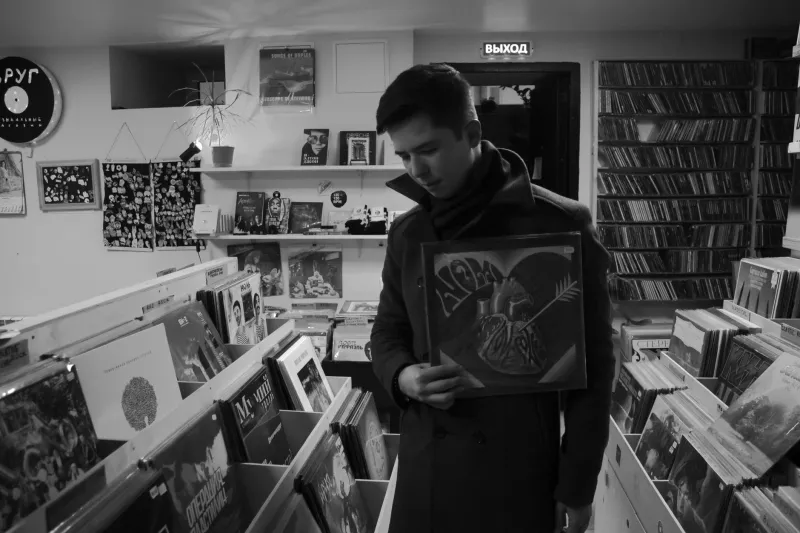
"There's something about the physicality that makes it feel like it actually happened," says Jordan, a 28-year-old vinyl collector and record store regular in Philadelphia. "I've listened to thousands of songs on streaming. I can barely remember most of them. But I remember every record I've ever bought. I remember where I was, who I was with, what it cost me."
Zines as Living Documents
Of all the tangible media experiencing a renaissance right now, zines might be the most politically charged.
The zine tradition in America has roots in science fiction fan communities of the 1930s, punk and riot grrrl movements of the '70s and '90s, and queer activist networks that used photocopied pamphlets to share information and build solidarity when mainstream media ignored or actively harmed their communities. The zine was always a tool for people who didn't have access to official channels of communication.
That history isn't lost on today's zine makers and collectors, many of whom see their practice as a direct continuation of that lineage.
Tyrell, a 24-year-old based in Oakland, has been making zines about Black skateboarding culture for three years. He prints them at a local copy shop, hand-numbers each edition, and distributes them through a combination of skate shops, art spaces, and direct mail.
"There's no algorithm deciding who sees this," he says. "It gets to someone because they were in the right place, or because someone who loved it passed it on. That's how culture is supposed to move."
His most recent issue sold out its 200-copy run in two weeks. He's already working on the next one.
The Vinyl Ritual
Vinyl's comeback has been well-documented at this point — record sales have outpaced CDs for multiple consecutive years, and pressing plants that were mothballed in the '90s are running at capacity again. What gets discussed less often is why the experience of vinyl feels so different from streaming, beyond the audiophile arguments about warmth and fidelity.
It's the ritual.
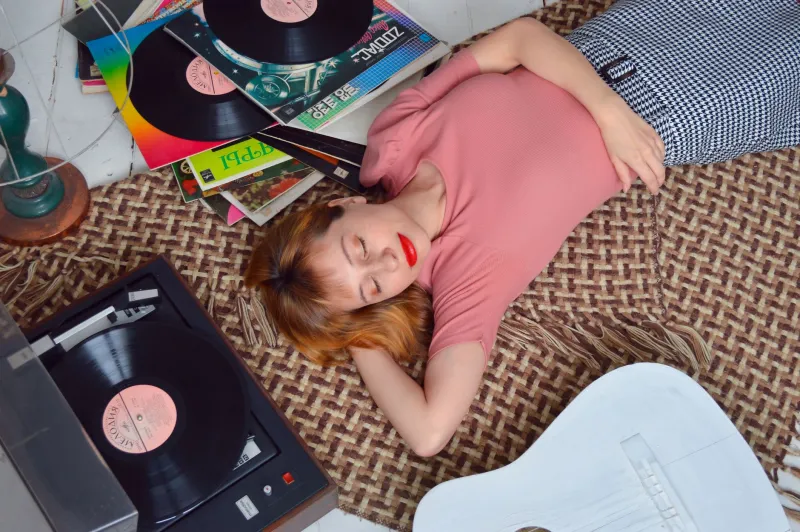
Playing a record requires presence. You have to take it out of the sleeve, lower the needle, flip it at the right moment. You can't shuffle. You can't skip easily. The album, as a sequenced artistic statement, is restored to its intended form. You listen to it the way the artist meant for you to listen to it.
For a generation raised on shuffle play and 30-second TikTok previews, this is genuinely countercultural behavior.
"I started collecting because my dad had records," admits Sofia, a 21-year-old student and vinyl enthusiast in Austin. "But I kept collecting because it changed how I listen to music. I actually finish albums now. I sit with them. I read the liner notes. It sounds basic, but it felt like I was finally actually hearing things."
She's part of a record swap community that meets monthly at a local bar — about 40 people, ranging from teenagers to retirees, trading records and recommendations. The intergenerational nature of it matters to her.
"It's one of the few spaces I'm in where age doesn't really matter," she says. "What matters is whether you care."
Craft as Community Infrastructure
Beyond music and publishing, the broader handmade art market is booming in ways that point to similar cultural hungers. Etsy, despite its growing corporate scale, still hosts millions of independent makers. Craft fairs have seen surging attendance. Independent art markets in cities like Denver, Detroit, and New Orleans draw thousands of visitors who could have bought a print from a big-box retailer but chose to spend more for something made by a specific human being with a story.
What these spaces offer isn't just products. They're community infrastructure — places where people with shared values find each other, build relationships, and participate in an economy organized around meaning rather than pure efficiency.
"When I buy something handmade, I'm entering into a relationship," says Leila, back in her zine-lined Chicago apartment. "I know who made it. I might follow their work for years. That's not a transaction — that's culture."
The Stakes
None of this is to romanticize scarcity or pretend that physical media is inherently more valuable than digital. Accessibility matters, and digital distribution has put music, writing, and art into the hands of people who couldn't afford or access physical versions.
But the collectors and creators driving this movement aren't anti-digital absolutists. Most of them use streaming services. Most of them have social media. What they're arguing — through their purchasing habits, their creative practices, their weekend rituals — is that not everything should be optimized for maximum convenience and minimum friction.
Some things are worth slowing down for. Some objects are worth owning. Some culture deserves to be held.
In Leila's apartment, surrounded by 340 zines that each carry the fingerprints of someone who cared enough to make them, that argument feels pretty hard to refute.