From Empty Lots to Electric Blocks: The Grassroots Creators Reimagining America's Forgotten Spaces
The building at the corner of 14th and Maple in Detroit had been empty for eleven years. Its windows were boarded up, its facade tagged and weathered, its parking lot cracked through with weeds asserting themselves through every available fissure. To the city, it was a liability. To the neighborhood, it was a wound.
To Kezia Brown and a loose coalition of local artists, muralists, and musicians, it was a canvas.
Over the course of eight months — navigating permits, fundraising bake sales, cold calls to city officials, and more than a few setbacks — they transformed the space into The Corridor, an open-access creative hub hosting everything from weekly open mics to ceramics workshops to rotating gallery installations by Detroit artists who'd never had a proper venue. The building still isn't formally theirs. But it's alive in a way it hasn't been in over a decade.
"Nobody was coming to save this block," Kezia says. "So we decided to stop waiting."
This kind of DIY cultural placemaking — scrappy, community-driven, often legally complicated, and almost always transformative — is happening in cities across the country. And it's reshaping not just physical spaces, but the very idea of who gets to define a neighborhood's identity.
The Anatomy of a Forgotten Space
American cities are full of them. Post-industrial neighborhoods hollowed out by factory closures. Commercial corridors gutted by the one-two punch of e-commerce and the pandemic. Vacant lots that sat through decades of deferred development plans. Alleyways that became, at best, ignored and, at worst, unsafe.
These spaces represent real loss — economic, social, psychological. But they also represent possibility, particularly for communities that have historically been priced out of formal arts infrastructure. Gallery space in major cities is expensive. Performance venues require capital. Studio space has become a luxury.
Abandoned storefronts and vacant lots? Those are just sitting there.
"There's a long tradition in this country of communities making culture out of whatever's available," says Dr. Simone Garrett, an urban studies professor at the University of Illinois Chicago who studies grassroots placemaking. "What we're seeing now is a new generation applying that same ingenuity with a lot more organizational sophistication."
Case Study: The Alley Galleries of Los Angeles
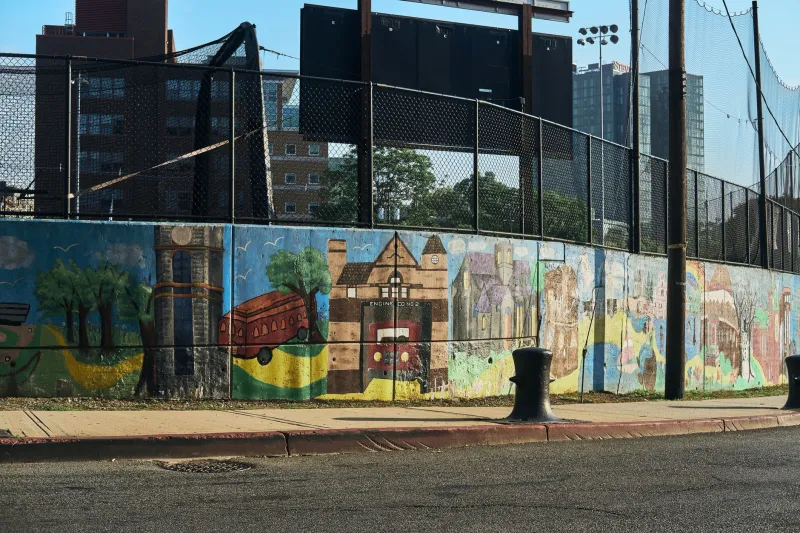
In the Boyle Heights neighborhood of East LA, a stretch of alleyway behind a row of small businesses has become one of the most talked-about outdoor gallery spaces in the city. It started with a single mural commissioned by a local bakery owner who wanted something interesting on the back wall. Then another artist asked if they could add something. Then another.
Now, the alley hosts rotating works by Chicano artists, Indigenous painters, and emerging muralists from across Southern California, curated informally by a neighborhood arts collective called Raíces Vivas. There are no formal admission policies, no opening hours, no gift shop. People wander through at all hours. Residents take photos there. Kids use it as a backdrop for quinceañera portraits.
"We didn't apply for a grant to do this," says collective member Lucia Vargas. "We just started painting. The community showed us it mattered by showing up."
The legal situation is characteristically improvised — the collective has informal agreements with the property owners, nothing binding, nothing guaranteed. But so far, the arrangement has held, and the alley has become a point of neighborhood pride in a community that has spent years fighting displacement pressures from gentrification.
Case Study: Pop-Up to Permanent in New Orleans
In New Orleans' Tremé neighborhood — one of the oldest African American communities in the country — a vacant shotgun house became the unlikely home of a rotating artist residency program called House Sessions. Founded by musician and community organizer Marcus Delacroix, the program invites local artists to live and work in the space for three-month periods, with the stipulation that they host at least four free public events during their residency.
What started as a workaround for a property in legal limbo (the owner, a distant heir, was willing to let it be used rather than let it deteriorate further) has evolved into something more structured. House Sessions recently secured a two-year lease agreement and is in conversations with a community development financial institution about longer-term ownership.
"The city has a thousand policies about what spaces can't be," Marcus says. "We just started doing what we needed to do and figured out the paperwork as we went."
The ripple effects have been tangible. Two of the resident artists have since opened their own studios in the neighborhood. A small café opened next door, partly because its owner noticed the foot traffic the residency was generating. Property owners on the block, who had been fielding offers from out-of-state developers, have started talking to each other about what they actually want the street to look like in ten years.
The Legal Labyrinth (and How People Navigate It)
Let's not sugarcoat this part: DIY placemaking is legally complicated, and the complications are not evenly distributed. Communities of color, in particular, face disproportionate scrutiny when claiming public or semi-public space for cultural use. Permits that sail through in one neighborhood get held up for months in another. Informal arrangements that work fine for years can collapse overnight when a property changes hands.
"The legal framework for this kind of work is genuinely difficult," acknowledges attorney and arts advocate Priscilla Mwangi, who works with community organizations in Philadelphia on creative space issues. "But it's not impossible. The key is building relationships with city agencies before you need them, not after something goes wrong."
Organizations like Artspace (national), the Trust for Public Land, and various city-specific arts councils have started developing frameworks specifically designed to support community-led cultural placemaking — offering legal guidance, insurance structures, and advocacy support. The field is growing, even if it hasn't caught up with the pace of the work happening on the ground.
What Gets Built When Communities Build
The most compelling argument for DIY cultural placemaking isn't aesthetic or even economic — though the evidence on economic revitalization is genuinely strong, with multiple studies showing that artist-led community spaces increase foot traffic and small business viability in surrounding blocks. The most compelling argument is about agency.
When a neighborhood gets to decide what its vacant corner becomes — a gallery, a performance space, a community garden with an outdoor stage — it's exercising a form of cultural self-determination that top-down urban planning rarely allows. The space reflects the community's actual values, aesthetics, and needs, rather than a developer's projection of what will attract the most desirable tenants.
"There's a difference between a neighborhood that has culture done to it and one that creates culture from itself," says Dr. Garrett. "These projects are fundamentally about the second thing."
Back in Detroit, The Corridor just hosted its first anniversary celebration — a full-day festival with local food vendors, live music, a kids' art workshop, and a gallery show featuring work by forty neighborhood artists. Kezia Brown stood in the parking lot that had been full of weeds a year earlier, watching people she'd known her whole life move through a space that felt, finally, like it belonged to them.
"This block has a heartbeat again," she said. "That's not nothing. That's everything."
And somewhere in that reclaimed corner of Detroit, in that scrappy, complicated, beautiful act of community creativity, something essential about American cultural life is being rewritten — one empty lot at a time.