Painted Memory: The Muralists Turning Neighborhood Walls Into Living Archives
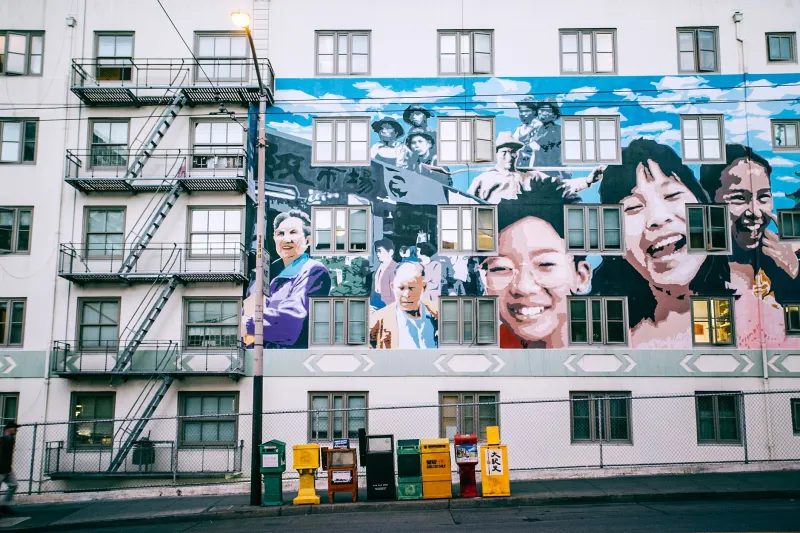
The building on the corner of 16th and Mission in San Francisco's Mission District has seen a lot. Waves of immigration, displacement, protest, celebration. For decades, its exterior walls have been covered in murals that document the neighborhood's largely Latinx history with a specificity and emotional weight that no textbook has managed to capture. Walk slowly past them and you're essentially reading a community's autobiography — one painted in colors vivid enough to stop foot traffic.
This is not a coincidence. It's a strategy.
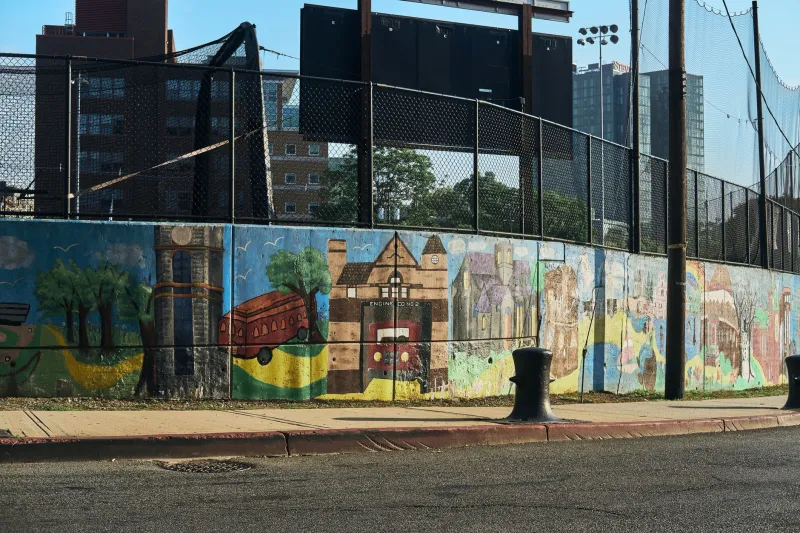
Across the United States, a growing coalition of artists, oral historians, community organizers, and everyday residents are turning to large-scale public murals as their primary tool for cultural preservation. The logic is direct and powerful: if the stories won't be saved by institutions, communities will save them on the walls.
When the Archive Is Outside
Traditional archives — museums, libraries, historical societies — have long been criticized for the stories they choose to center and the ones they leave out. Whose artifacts get displayed? Whose photographs get catalogued? For communities that have historically been marginalized, underrepresented, or actively erased from official records, the answer has often been discouraging.
Muralism offers a radically different model. The archive is public and free. It exists in the neighborhood it documents, visible to the people whose stories it holds. It doesn't require a grant application to access or a membership fee to view. And crucially, it is created in collaboration with the community itself — not about them, but by and with them.
In Chicago's Pilsen neighborhood, artist collective Yollocalli Arts Reach has spent years facilitating mural projects that document the experiences of Mexican and Mexican-American residents, many of whom are first- and second-generation immigrants. Their process is deliberately slow and community-driven: interviews, workshops, listening sessions, all before a single sketch hits the wall. The finished murals reflect stories that the residents themselves identified as most at risk of being lost.
"We're not interpreting their history," says one of the collective's lead artists. "We're amplifying what they already know and giving it a form that can't be easily ignored."
The Urgency Underneath the Paint
There's a particular urgency driving many of these projects. Gentrification has accelerated the pace at which communities are physically displaced from their own neighborhoods, and with that displacement comes the erasure of the cultural fabric that made those places meaningful. When a family moves out and a building is renovated, the stories embedded in that space can vanish with startling speed.
Murals have become, in many cases, a form of preemptive resistance. In Atlanta's Old Fourth Ward — the birthplace of Martin Luther King Jr. and a neighborhood undergoing rapid transformation — artists and residents have collaborated on a series of murals documenting the community's civil rights legacy and its everyday Black life in the decades since. The goal isn't just commemoration. It's staking a claim. This happened here. These people lived here. This matters.
In New Orleans, where Hurricane Katrina and its aftermath permanently altered entire neighborhoods, public art has served as a form of collective grief and memory work. Artists returning to flood-damaged areas created murals documenting the lives of displaced residents — their faces, their addresses, the details of what was lost. Some of those murals now stand in neighborhoods that look almost nothing like they did before the storm. They function as witnesses.
The Artist as Historian
The role these muralists occupy is genuinely new — or rather, it's a contemporary evolution of something ancient. The cave paintings at Lascaux were, in their way, community records. The murals of Diego Rivera were political and historical documents as much as they were art. What's happening now in American cities sits in that lineage, updated for a moment when the stakes of forgetting feel particularly high.
Many of the artists involved in this work have deliberately sought out training in oral history methods alongside their artistic development. They conduct recorded interviews. They work with community elders. They research archival photographs and cross-reference personal accounts with whatever documented history exists. The mural, when it finally appears on the wall, is the synthesis of all of that — a visual argument for why these stories deserve to persist.
In Detroit, where decades of deindustrialization have left entire blocks of architectural history crumbling, a loose network of muralists has been working with longtime residents to document the city's labor movement history, its jazz and Motown heritage, and the stories of communities that built the city's infrastructure while being systematically excluded from its economic rewards. The murals function as counter-monuments in a city full of empty pedestals.
What a Wall Can Hold That a Museum Can't
There's something that a mural can do that even the most thoughtfully curated museum exhibition cannot quite replicate: it lives where the story happened. When a grandmother walks her grandchildren past a mural depicting her own neighborhood's history, the transmission of memory becomes immediate and embodied. The wall is doing the work of a thousand conversations.
Museums, for all their value, require a visitor to enter a dedicated space and adopt a particular mode of reception. Public murals demand nothing. They meet people where they are — on the way to work, waiting for the bus, pushing a stroller. They insert history into the texture of daily life in a way that feels less like education and more like recognition.
This accessibility is especially meaningful for communities where distrust of institutions runs deep. A mural doesn't ask anything of its audience. It simply offers.
The Walls Are Listening
Not every mural survives. Buildings get sold, painted over, demolished. The impermanence is real, and artists working in this space are acutely aware of it. Many now document their work extensively — high-resolution photography, video, oral histories of the creation process — ensuring that even if the wall disappears, the record remains.
But there's also something fitting about the fragility. These communities have always known that their stories could be taken away. Choosing to paint them on walls anyway — loudly, beautifully, publicly — is itself a kind of statement about what it means to insist on being remembered.
The murals say: we were here. We are here. And we're not going quietly into any archive that wasn't built for us.