Spine and Thread: The Young Americans Binding Their Own Books by Hand
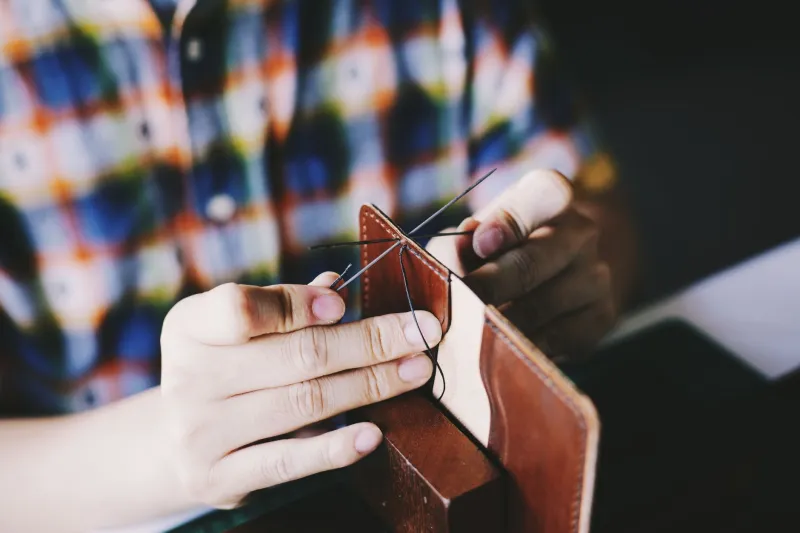
There's a particular satisfaction in holding a book you made yourself. Not assembled from a kit, not printed through some on-demand service — but actually stitched, folded, pressed, and trimmed by your own hands. For a growing community of young Americans, that feeling has become almost addictive.
DIY bookbinding — once the quiet territory of conservators, rare book librarians, and the occasional eccentric hobbyist — has found an unexpected new audience. Millennials and Gen Z creators are filling studio apartments with bone folders and awls, sourcing handmade paper from small suppliers, and sharing their finished journals, poetry collections, and artist books on social media with an enthusiasm that's hard to fake. Something real is happening here, and it goes a lot deeper than aesthetics.
Folding Back Against the Feed
It's worth asking why, in an era when anyone can self-publish an ebook in under an hour, so many young people are choosing the slowest possible alternative. The answer, if you spend any time talking to binders, is almost always the same: because slow is exactly the point.
"I was burning out on everything being instant," says Maya Delacroix, a 27-year-old graphic designer based in Portland, Oregon, who started bookbinding during a particularly rough stretch of pandemic-era freelance work. "I needed something where I had to actually wait — where rushing would ruin it. Bookbinding punished impatience in a way I kind of needed."
Delacroix now runs a small Etsy shop called Foxed & Folded, selling hand-sewn journals and blank sketchbooks with covers made from salvaged fabric and vintage maps. She still takes design clients, but bookbinding, she says, has become the creative practice that keeps everything else from feeling hollow.
Hers is not an isolated story. Across cities like Chicago, Austin, Brooklyn, and Denver, community bookbinding workshops are filling up faster than instructors can add new sessions. YouTube tutorials on Coptic stitch and French link binding are racking up hundreds of thousands of views. And small suppliers of bookbinding cloth, Japanese tissue, and bookboard are reporting steadily increasing demand from first-time buyers who found them through Reddit threads and craft forums.
What the Craft Actually Teaches
Bookbinding has a vocabulary that takes a little getting used to — signatures, endpapers, kettle stitches, case binding — but practitioners are quick to point out that the learning curve, while real, is part of the appeal. Each new structure is a puzzle. Each material behaves differently. The craft rewards attention in a way that feels almost countercultural right now.
"You're learning to read the grain of paper, to feel when the glue is too wet," explains Jordan Osei, a 31-year-old who teaches bookbinding workshops at a makerspace in Atlanta. "It trains you to notice things. And I think a lot of people are hungry for that — for a practice that asks you to actually pay attention."
Osei started bookbinding as a way to create handmade journals for his own writing, then found himself fielding so many questions from friends that teaching felt like the natural next step. His weekend workshops — which cover everything from simple pamphlet stitch to more complex long-stitch structures — regularly sell out within days of being posted.
What surprises him most, he says, is the range of people who show up. "I've had retired schoolteachers next to 22-year-old illustrators next to someone who just went through a divorce and needed something to do with their hands. Bookbinding doesn't care about your background. It just asks you to show up and be present."
The Book as Personal Artifact
Beyond the meditative pull of the process, there's something else driving the surge: a desire to make objects that carry genuine personal meaning. In a culture saturated with content — where writing often feels disposable the moment it's posted — a handbound book offers a different kind of permanence.
Poet and visual artist Simone Reyes, based in Los Angeles, binds every collection she writes by hand before she considers doing anything else with it. "The act of binding a manuscript changes how I feel about the work," she says. "It becomes a thing in the world. It has weight. I can't just delete it."
Reyes uses a combination of letterpress-printed pages and hand-marbled covers, each copy slightly different from the last. She sells limited editions through her own website and at local art fairs, where she says customers often spend several minutes just holding the books before deciding to buy. "They're feeling it out," she laughs. "That's the whole thing, right? You can't get that from a screen."
This tactile dimension — the texture of cloth-covered board, the slight give of hand-sewn signatures, the smell of paste and paper — is something digital publishing simply cannot replicate. And for a generation that grew up largely online, that physical reality carries a kind of novelty that feels almost radical.
From Ritual to Revenue
For some makers, what began as a personal practice has quietly evolved into a livable creative business. The handmade book market occupies a comfortable niche: priced above mass-market stationery but accessible enough that buyers don't need to be serious collectors to participate. A well-made handbound journal might sell for $40 to $120 depending on size, materials, and maker reputation — and buyers, by and large, seem willing to pay it.
"People understand that they're paying for time and skill," says Delacroix. "When you show someone the stitching on the spine, when they can see that every page was folded by hand — that conversation changes. They get it."
Small bookbinding businesses are increasingly finding audiences through Instagram and TikTok, where process videos — the satisfying thwack of a bone folder, the careful threading of a needle through paper — perform remarkably well. The algorithm, it turns out, is not entirely immune to the appeal of slow, careful making.
But most binders are careful not to let the business logic overwhelm the practice itself. "The minute it becomes purely transactional, I think I'd lose the thing that makes it worth doing," says Osei. "The books I make for myself — those are still where everything starts."
Something Worth Keeping
What the bookbinding renaissance ultimately points to is a broader hunger — for creative practices that produce objects rather than content, for skills that take time to develop, for work that leaves something tangible behind. In a media landscape where so much is instantly published and just as instantly forgotten, the handbound book offers a quiet alternative: something made slowly, made carefully, made to last.
There's a certain kind of stubbornness in that — a refusal to accept that everything has to be fast and frictionless. And it looks, from where things are heading, like more and more young Americans are finding that stubbornness deeply appealing.
The pages are blank. The thread is ready. All you have to do is start stitching.