Move That Couch: How Americans Are Using Furniture as a Mood Board for Life
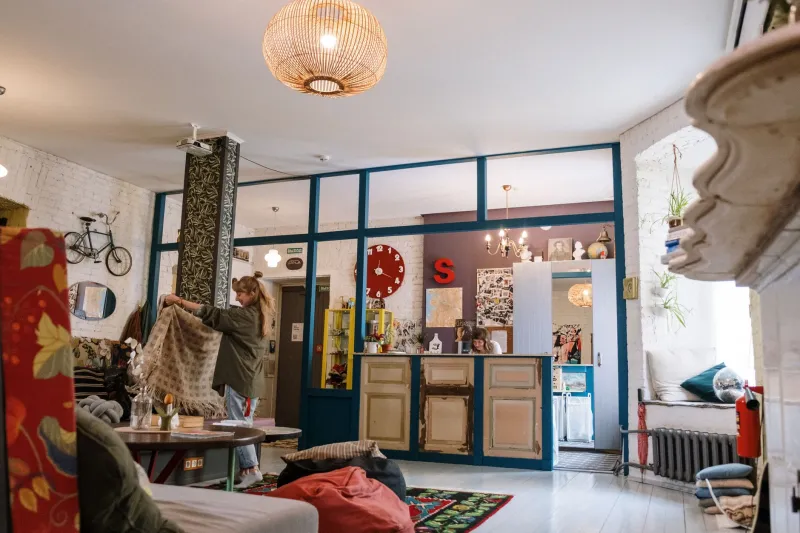
It usually starts on a Sunday afternoon. Maybe you've been staring at the same corner of your living room for six months, and something about the way the light hits the bookshelf just isn't sitting right anymore. So you move it. Then the chair. Then the lamp. Then the rug shifts three feet to the left, and suddenly — somehow — the whole room breathes differently. You breathe differently.
This is not interior design in the traditional sense. Nobody's hiring a decorator. Nobody's dropping $800 on a new sectional. This is something more instinctive, more personal, and increasingly more common across American homes: the ritual of rearrangement.
A Room That Keeps Up With You
Ask anyone who does it regularly and they'll tell you the same thing — the urge hits when something shifts internally before it shifts physically. A new job, a breakup, the end of a hard season, or just a general restlessness that's hard to name. The room starts to feel like a skin that no longer fits.
Samira Okonkwo, a 34-year-old graphic designer in Atlanta, rearranges her apartment roughly once a month. "It's cheaper than therapy and honestly just as effective," she says, half-joking. "When I moved my desk away from the wall and toward the window, I felt like I'd given myself a promotion. Nothing about my actual job changed. But everything about how I showed up to it did."
That instinct — the sense that spatial change can catalyze emotional change — isn't just anecdotal. Psychologists have long noted the relationship between our environments and our mental states. The field of environmental psychology has explored how physical surroundings influence mood, focus, and even identity. When we alter our space, we're not just moving objects. We're signaling to ourselves that something new is possible.
The Anti-Consumption Makeover
What makes rearrangement particularly resonant right now is what it doesn't require: money. In an era where home décor has been aggressively monetized — where every aesthetic shift on social media comes packaged with a shopping list — rearranging what you already own feels almost rebellious.
The practice sits at an interesting intersection of creativity and resourcefulness. You're working with constraints. You're problem-solving. You're curating. And you're doing it without adding anything to a landfill or maxing out a credit card.
Denver-based artist and part-time furniture flipper Marcus Teel has made a kind of philosophy out of it. "I haven't bought a single new piece of furniture in three years," he says. "But my apartment looks completely different every few months. I rotate art. I swap rooms. Last spring I moved my bed into what was technically the dining area and turned the bedroom into a studio. Best decision I ever made."
For Marcus, rearrangement is an extension of his creative practice — a three-dimensional collage using the materials of daily life. He's not alone in thinking about it that way.
Small Shifts, Big Meaning
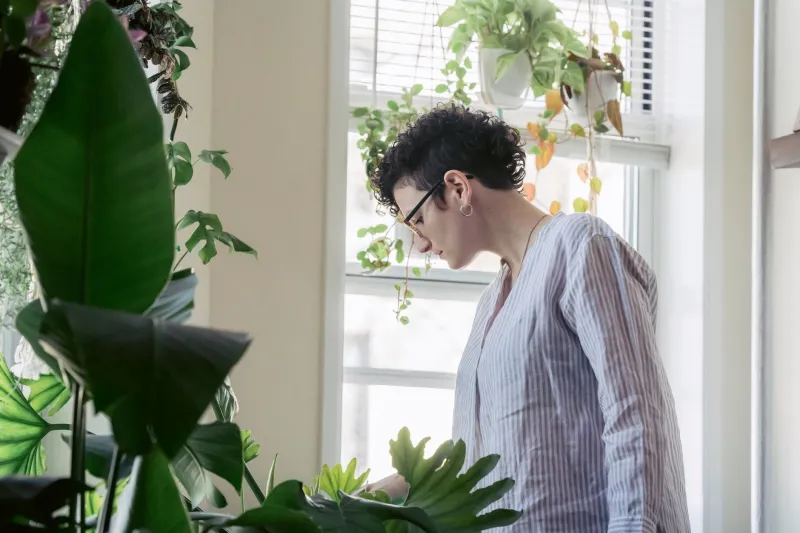
Not every rearrangement is a full room overhaul. For plenty of people, it's far subtler — a plant moved to a different windowsill, a stack of books reorganized by color instead of author, a framed photo rotated to catch the afternoon light. These micro-adjustments are their own kind of creative act.
There's something meditative about it. The physical engagement — actually touching your objects, holding them, deciding where they belong — creates a mindfulness that's hard to replicate through scrolling or streaming. You're present. You're making decisions. You're in conversation with your space in a way that feels genuinely alive.
Jordan Alvarez, a high school art teacher in Chicago, describes the ritual as a form of "low-stakes curation." "In my classroom, I'm always thinking about how the physical layout affects the energy of the room," she says. "I brought that home. Now I think about sightlines, about what you see first when you walk in, about what the room tells you to do when you're in it. It sounds abstract, but it makes a real difference."
The Algorithm Can't Do This for You
There's a reason this practice feels so satisfying in a moment when so much of our creative and emotional life has migrated online. Rearranging a room is irreducibly physical. It demands your body, your judgment, your particular knowledge of how you live and move through space. No app can tell you exactly where your grandmother's armchair will feel most like home. No algorithm knows how the afternoon sun crosses your floor in November.
And that specificity — that deeply personal, non-transferable quality — is exactly the point. Your rearranged room is not a mood board for anyone else. It's a record of where you are right now, built from the things you've chosen to keep around you.
Social media has picked up on the trend, of course. "Before and after" rearrangement videos rack up millions of views on TikTok and Instagram Reels, often with zero new purchases involved. The comments sections are full of people recognizing themselves — "I did this last weekend," "I literally moved my couch three times this month" — as if collectively acknowledging a behavior they hadn't quite had a name for.
Making Space for Who You're Becoming
Maybe the most interesting thing about the rearrangement ritual is what it reveals about how we understand home. Not as a fixed backdrop to our lives, but as something fluid — something that should grow and shift alongside us.
In that sense, it's deeply optimistic. Every time you push the furniture against the wall and stand in the empty center of a room, trying to imagine it differently, you're betting on your own capacity for change. You're saying: the version of me that arranged this room isn't the only version. There's room — literal room — for something new.
That's a quiet but powerful thing to believe. And it doesn't cost a cent.
So if you've been staring at that corner, feeling vaguely unsatisfied and not quite sure why — maybe it's not the corner. Maybe it's just time to move something.