Leaves, Names, and Quiet Rituals: Why Americans Are Falling Hard for Their Houseplants
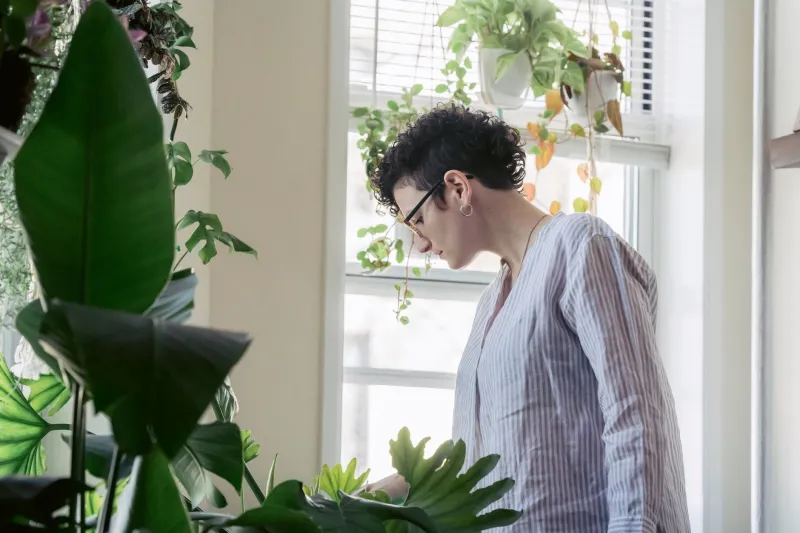
Somewhere in a Chicago apartment, a woman named Dani starts every morning the same way. Before coffee, before her phone, before the first notification has a chance to hijack her attention — she walks through her living room and checks on her plants. She greets them by name. Matilda, the fiddle-leaf fig in the corner, gets a little extra attention today because her leaves looked dusty yesterday. Gerald, a stubborn snake plant she's had for four years, just gets a nod of acknowledgment. "He doesn't need much," Dani says, laughing. "But I still like to check in."
This kind of behavior used to get you some side-eye. Now it gets you a following on TikTok and a community of thousands who completely understand. The so-called plant parent movement — which exploded during the pandemic and has only deepened since — has quietly become one of the more interesting cultural phenomena of the decade. And it's not really about plants.
More Than a Decorating Trend
When interior design publications started running headlines about houseplants in 2020, it was easy to write the whole thing off as aesthetic noise. Millennials buying monsteras for their apartments, the jungle-home look spreading across Instagram grids. Pretty, sure. Meaningful? That part took a little longer to see.
But spend any time in the actual communities that have grown up around plant ownership — the Reddit threads, the local plant swaps, the Facebook groups with names like "Plant Addicts Anonymous" — and you start to notice something different happening. People aren't just collecting plants. They're building rituals around them. They're using them as anchors.
In a culture that increasingly rewards speed, multitasking, and constant digital engagement, tending to a living thing that operates entirely on its own timeline is almost a radical act. Plants don't care about your inbox. They can't be rushed. A propagation takes as long as it takes. That slowness, for a lot of people, is exactly the point.
Naming Things Makes Them Real
Ask any committed plant parent about the naming thing and you'll get a mix of sheepishness and complete unapologetic enthusiasm. The sheepishness lasts about thirty seconds before they start telling you about their collection.
Naming plants isn't new — people have been doing it forever — but the cultural visibility of the practice has shifted. It's no longer something you hide. It's something you post about. And the act of naming, as simple as it sounds, does something real to how we relate to the things in our care. It creates responsibility. It creates attachment. It turns an object into a relationship.
Psychologists have a term for this: the "IKEA effect" suggests that we value things more when we've invested effort in them. But the plant parent dynamic goes further. When you name something and watch it grow — when you nurse it back from root rot or celebrate its first new leaf — you've entered into a kind of reciprocal relationship. The plant responds to your care, even if it can't say thank you. That feedback loop matters.
For a lot of younger Americans especially, who came of age in an era of digital-everything and often describe feeling disconnected from physical reality, that tangible cause-and-effect is genuinely nourishing.
The Ritual Is the Practice
What's striking about serious plant parents isn't just the number of plants they own — though collections of fifty, a hundred, even more are not uncommon — it's the intentionality they bring to the care of them.
Watering days become weekly rituals. People research the native climates of their plants so they can better understand what conditions they're replicating. They track humidity levels, rotate pots toward windows, talk through problems with online communities the way other people consult doctors. There's a whole vocabulary that develops: "chonky roots," "variegation," "aerial roots," "fenestration." Learning it feels like being let into something.
Marco, a teacher in Austin who started collecting aroids — the family that includes monsteras and philodendrons — during the early pandemic, describes his Sunday morning watering routine as the most grounding part of his week. "It's the one time I'm not thinking about anything else," he says. "I'm just looking at the plant, feeling the soil, deciding what it needs. It's almost meditative."
That language — meditative, grounding, present — comes up constantly in these conversations. And it's not accidental. What plant care offers, structurally, is very similar to what mindfulness practices offer: a reason to be fully in your body, in your space, in the present moment. Except it comes with better Instagram content.
Community Grows in the Dirt
One of the more underappreciated dimensions of the plant parent movement is how thoroughly social it has become. Plant swaps — informal gatherings where people trade cuttings and propagations — have popped up in cities and small towns across the country. They function less like transactions and more like community rituals. You bring a cutting of something you love, you leave with something you've never grown before, and you spend a few hours talking to strangers who share your obsession.
Online, the communities are massive and genuinely warm. Subreddits dedicated to specific plant genera have hundreds of thousands of members. People post their new growth with the same energy others reserve for major life announcements. They ask for help diagnosing yellowing leaves and receive detailed, thoughtful responses within minutes.
There's something quietly beautiful about that — a corner of the internet organized entirely around helping living things thrive. In a media landscape that often runs on outrage and competition, plant communities tend to run on generosity. Someone who has a rare cutting almost always wants to share it. The culture rewards abundance over scarcity.
Growing Something in a World That Moves Too Fast
It would be easy to romanticize all of this, and maybe we are a little. Plant ownership isn't a cure for anything. People still stare at their phones. The algorithm doesn't stop just because you watered your pothos.
But there's something worth taking seriously in the scale and sincerity of this movement. Millions of Americans have chosen, deliberately, to bring living things into their homes and to organize part of their daily lives around keeping those things alive. They've created names and rituals and communities around it. They've made it meaningful.
In a cultural moment defined by so much that is fast, flat, and frictionless, the act of tending to something slow and rooted and real feels like a form of resistance. Not a loud one. Not a political one. Just the quiet, stubborn insistence that physical presence matters. That care matters. That something that grows at its own pace is worth your attention.
Dani, back in Chicago, says she doesn't think too hard about why her plants matter to her. "I just know that my apartment feels alive because of them," she says. "And that makes me feel more alive in it."
Matilda, for the record, is doing great.