Press Record Before the Wrecking Ball: The Quiet Race to Save America's Block Sounds
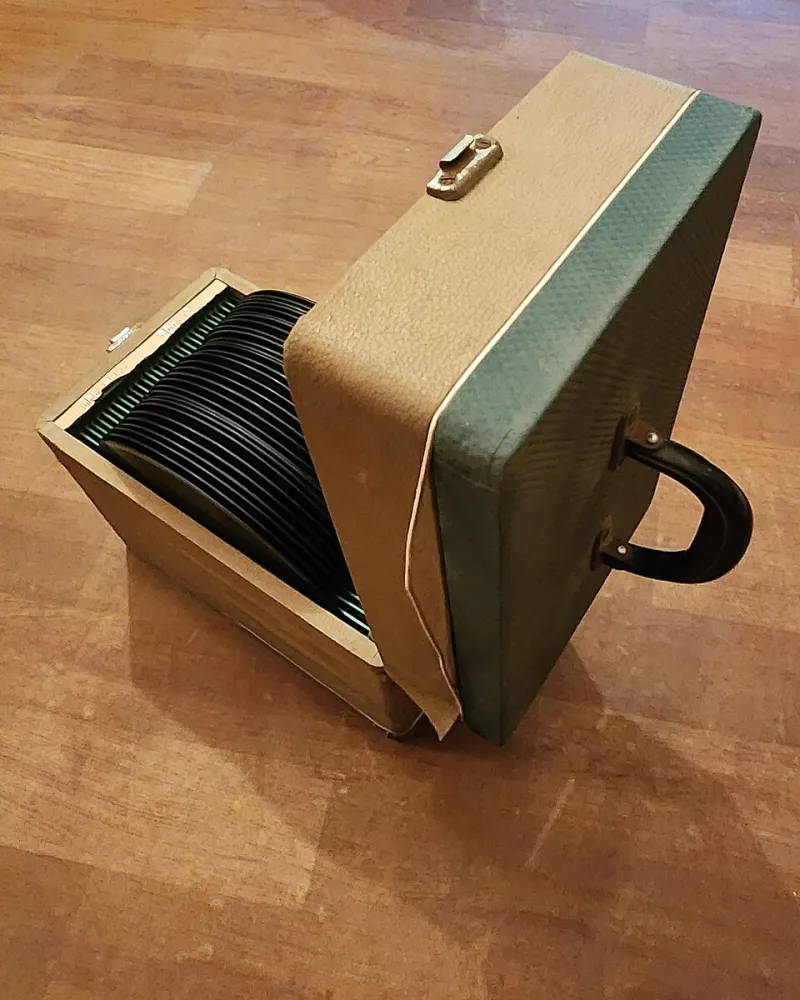
Photo: Amitbalani, CC0, via Wikimedia Commons
The ice cream truck on my old block played a song that was almost, but not quite, 'Greensleeves.' Nobody knew why. Nobody asked. It came down the street at 7:40 on summer nights, wobbling through a speaker that had given up years ago, and then it was gone, and then it came back the next night, and that was the whole ritual.
The truck doesn't come anymore. The lot where it parked is a six-story building with a lobby that smells like new carpet. And the only reason I can still hear that song is that a neighbor recorded it on her phone in 2019, badly, with wind on the mic, and posted it to a community group that has since gone private.
That accidental archive is the seed of something bigger. Across the country, a loose network of field recordists, oral historians, and plain curious neighbors is trying to capture the sound of American blocks before those blocks change beyond recognition. Not the landmarks. The texture. The stuff nobody thinks to preserve because it's too ordinary to notice until it's gone.
What a Block Actually Sounds Like
Ask someone to describe their neighborhood and they'll give you buildings. Ask them what it sounds like and they'll pause, then give you everything.
The screen door that slaps twice. The barber on the corner doing a running commentary that half the block can hear. The bus that idles too long. Church choir practice bleeding through an open window on Wednesday nights. Somebody's car stereo with a subwoofer that makes the whole street vibrate at a frequency you feel in your teeth. The train that everyone claims to have stopped hearing years ago and nobody has actually stopped hearing.
Sound artists have a name for this — acoustic ecology, the study of how environments sound and what those sounds mean. But you don't need the term to understand the stakes. When a block gets redeveloped, the buildings go first in the photos and the sounds go first in memory. The new place is quieter, usually. Cleaner, definitely. And it sounds like nowhere.
The Ethics of Capturing Someone's Morning
Here's where the romance gets complicated. A recording of a block is a recording of people, and people did not necessarily agree to be in your art project.
Most of the recordists doing this work have landed on a similar set of rules, learned the hard way. Don't record private conversations, even by accident — if you catch one, cut it. Ask before you point a mic at a person, a storefront, or a church service. Put up a sign at public events. Don't publish anything identifiable without a conversation and a name spelled correctly. And don't treat a neighborhood's noise as raw material for someone else's mood piece.
The last one matters most. There's a long tradition of outsiders swooping in to document a place right before it changes, framing it as gritty or authentic or vanishing, and then leaving with the only copy. The better version of this work is slower and more boring: build relationships, hand over the files, let the people who live there decide what gets kept and what gets deleted.
A recording is not a souvenir. It's a document, and documents have owners.
The Kit Fits in a Tote Bag
You do not need a grant. You need a recorder that fits in a coat pocket and the patience to stand still for twenty minutes.
A phone works, honestly, if you get close and keep your hands off it. A dedicated handheld recorder — a Zoom, a Tascam, any of the small ones with a decent stereo pair — costs less than a nice pair of sneakers and will outlive your enthusiasm for the project. Add a foam windscreen, which is the single most important $6 you will ever spend. A contact microphone, the kind that sticks to a surface, is a nice second purchase if you fall in love with the sound of fire escapes and radiator pipes.
Then learn the least glamorous skill in audio: standing still. Most bad field recordings are bad because the recordist was moving. Plant your feet. Breathe quietly. Let the block perform.
Where the Tapes Go
This is the part that separates an archive from a hard drive full of files nobody will ever open.
Some recordists deposit their work with the local historical society. Some hand it to the public library, which is doing more archiving than most people realize and will often accept a well-labeled collection. Community radio stations air soundwalks. A few projects press small runs of tapes or post free downloads with liner notes written by the people who live there.
The label matters as much as the audio. Date, time, cross streets, weather, who recorded it, who consented, and what changed afterward. A file called 'ambience3.wav' is a file. A file with a paragraph attached is history.
Recording as a Form of Saying Goodbye
None of this stops a building from coming down. A microphone is not a permit, and an archive is not a protest, though it can be a quiet one.
What it does is refuse the idea that a place was only ever its architecture. Blocks are sounds before they are anything else — the argument at the barbershop, the truck, the brakes, the choir. Capturing that is a way of saying: this was here, this was ordinary, and ordinary was worth keeping.
So record the ice cream truck. Get the song. Stand still, breathe quiet, and ask first.